When Seams Become Audible
One Thoresby Street, Nottingham, UK
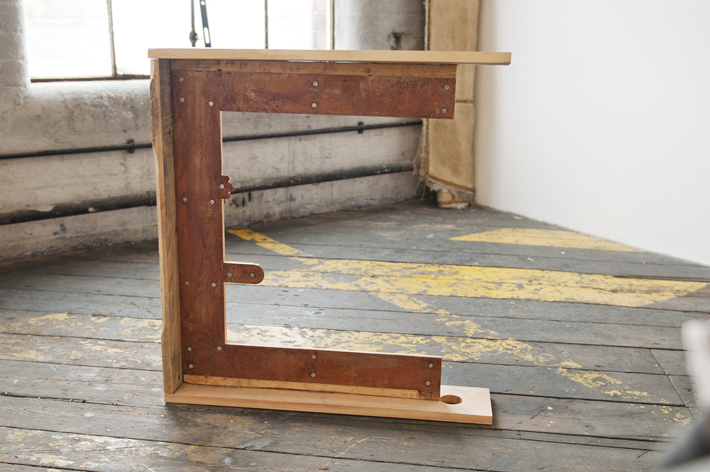
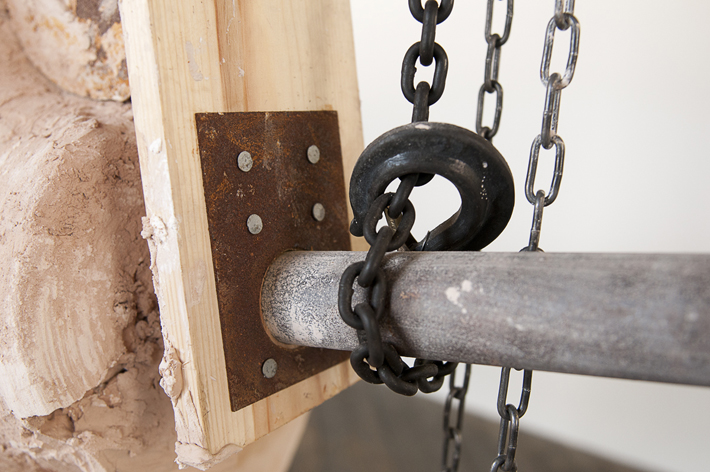
Plaster, ceramic, steel, wood, polystyrene, latex, rachet strap
2020
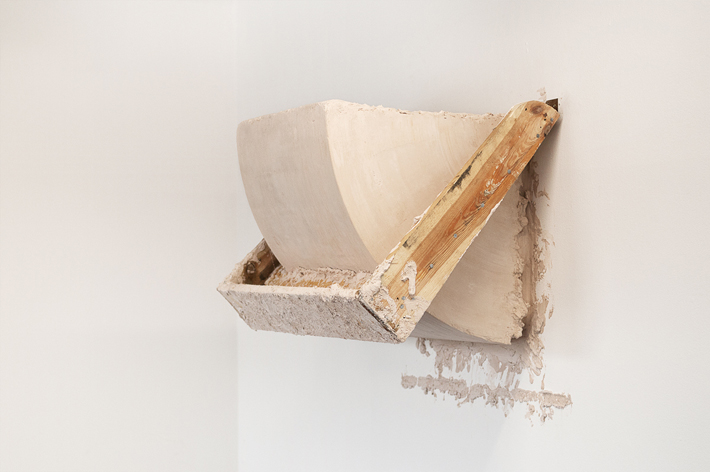
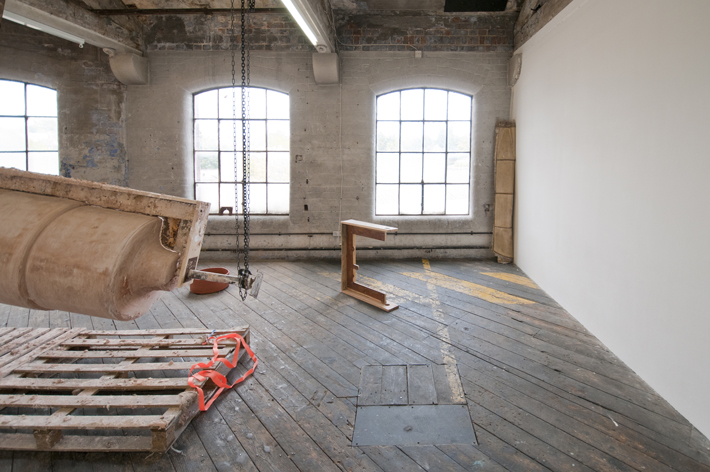
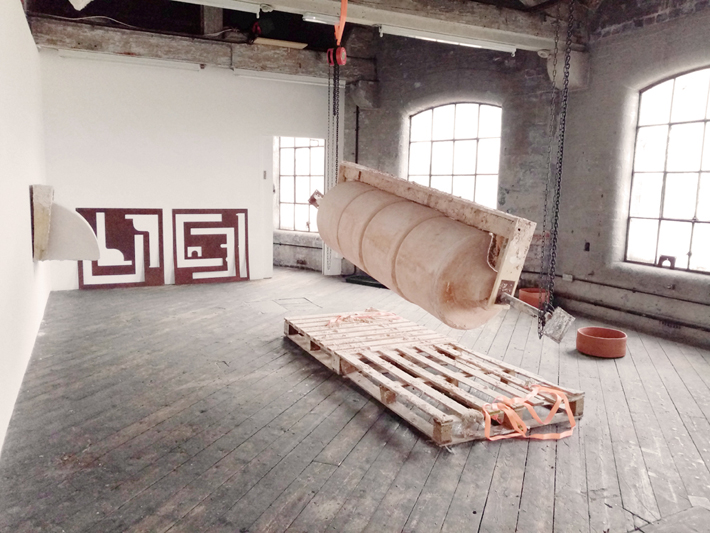
In 'When Seams Become Audible' Fitz presents a series of objects responding to the Attic Gallery at OTS, with the
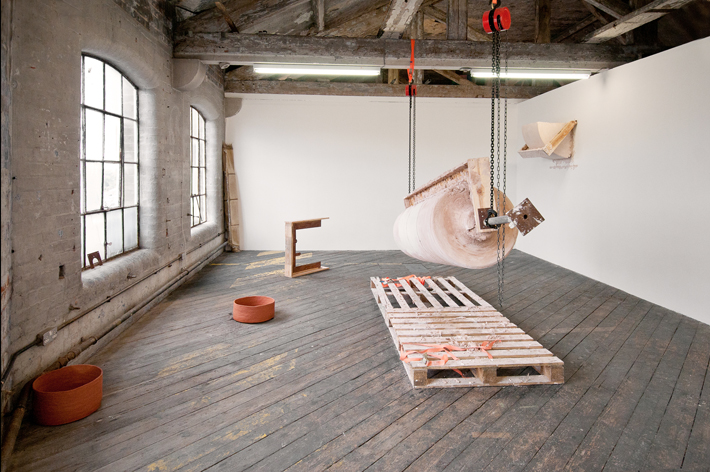
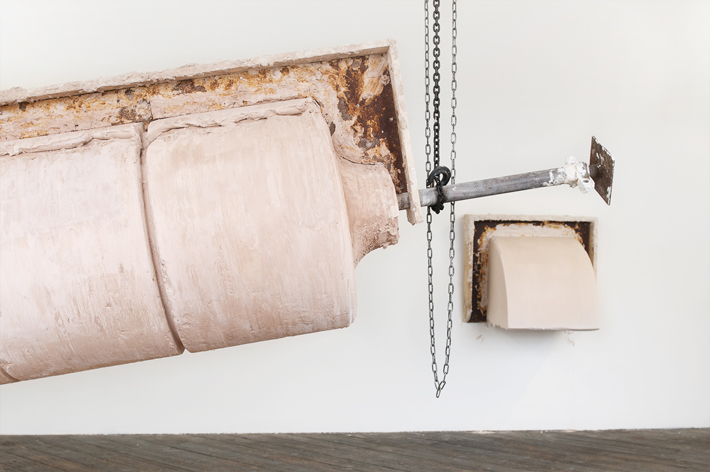
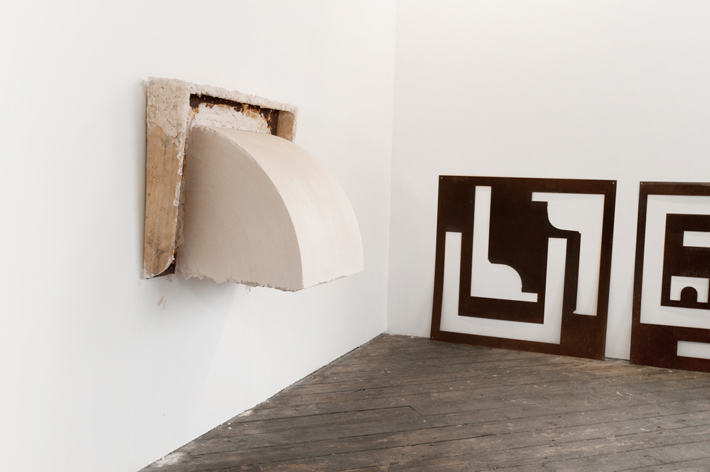
works on display being the result of a 6-week long residency. The turned, pushed, pulled and suspended forms work as a reactivation of their surroundings, beginning to interact with the architecture and challenging our understanding of how we experience space and everything that comes with it. Fitz offers an invitation to resee these places we inhabit through fresh eyes, creating a new kind of imagined and activated environment.
To view the publication of 'When Seams Become Audible' click on the
link
A seam. A connector. A join.
Audible. A trembling. A process. (Sarah Tutt, 2020)
On viewing WHEN SEAMS BECOME AUDIBLE, one immediately knows this work is
conceived by Fitz. Signature acts of translation and transformation are visible - the
space is filled with an architectural and industrial vernacular; elemental forms are
honed from the space in which they sit; there is raw yet precise use of unadulterated
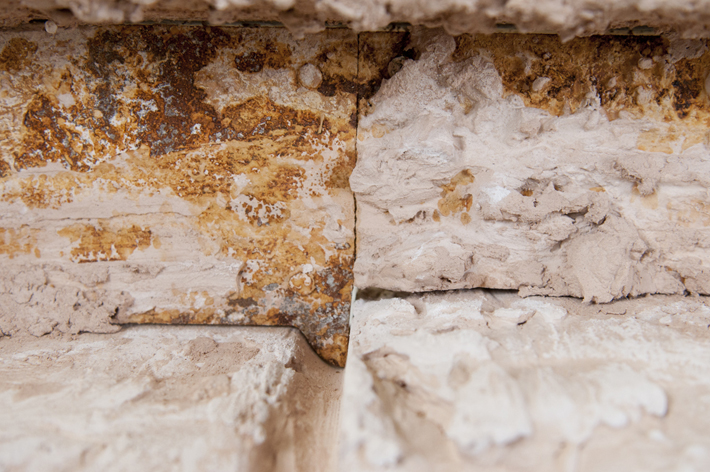
materials.This work is physical. The labour of manual processes is tangible - turning, pulling,
pressing, carving, extracting, pouring, wrapping, peeling and casting. They require the
body of the artist as a tool, as energy and as a force. A tight taxonomy of colour and
texture holds the elements together. The palate is familiar but developed - exhumed
from the materials themselves – with muted, dusty tones of the flesh of plaster,
unglazed ceramic, unadulterated metal and wood and the pale skin of latex and
hessian.
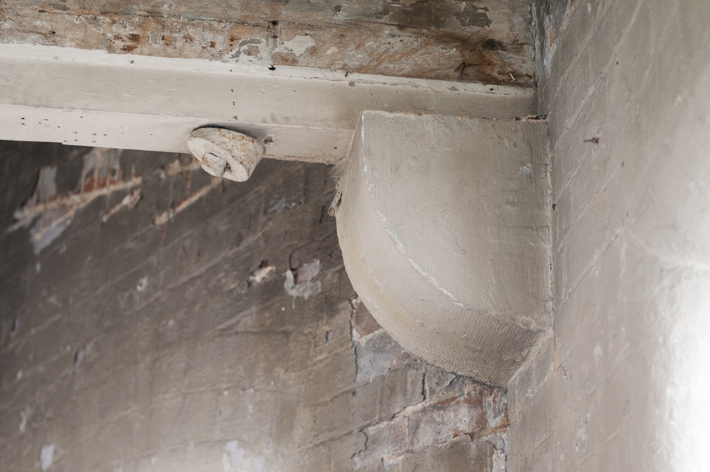
The 2D profiles of the space are translated into a series of 3D corporeal
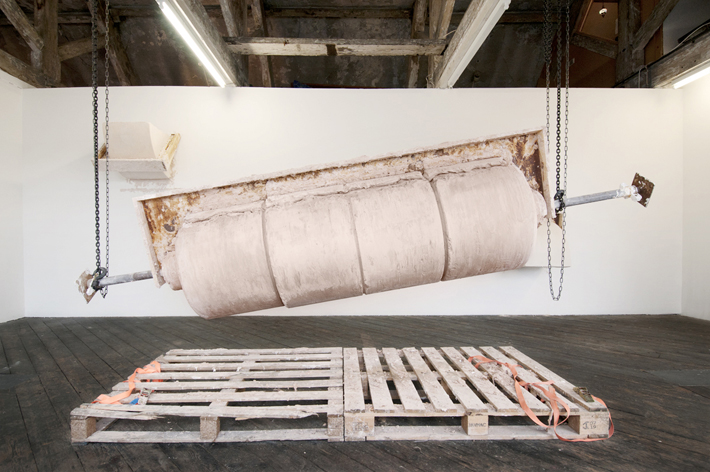
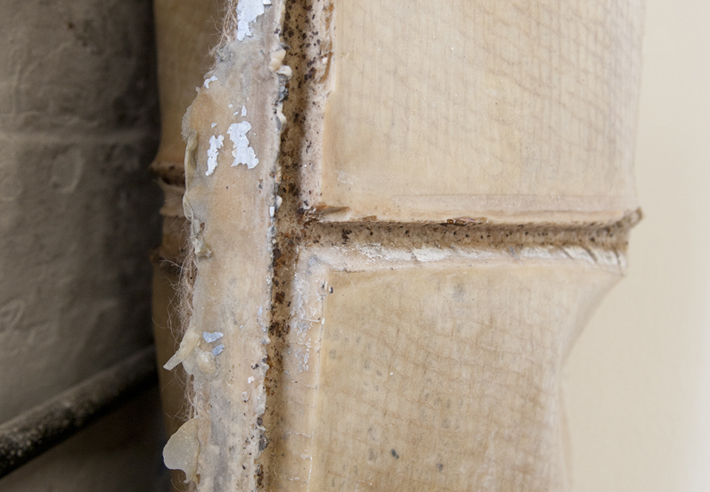
bodies. We are initially confronted by a heavy, seamed, wounded carcass of a body
hanging from chains, in a state of suspended animation. It demands to be looked at,
offering us a 360degree view of its surfaces and fissures. Other works play out
through the space as if extensions to it. It is as if the space-as-body has been recut,
reconfigured and recalibrated. It is as if the space has given birth to iterations of itself.
All elements are as interior to the space as a foetus is to a belly. A genetic code has
been imprinted from the walls, windows, ceilings and surfaces of the surrounds, and
corporeal wounds, veins and skin have been inherited.
This work is born of the space. It has been made in the space, not imported. We
walk not only around a gallery but also around the artist’s studio, where sculptural
forms beckon us to trace a journey from one to another. It is in this tracing that we,
the viewer, stitch the work together. We provide the thread. It is perhaps in this
stitching when seams become audible.
Originally from Austria, Katharina speaks English, Spanish, Catalan, French and
German. It is not surprising that the processes of translation between ideas, materials
and spaces seep into her work, or that she uses grammatical re-visioning and
wordplay to lead the viewer into a process of decoding. In WHEN SEAMS BECOME
AUDIBLE there is a strong sense that the work is waiting for this to happen, waiting for
us to stich it together.
Walk, breathe and listen.
On UNDOING and RECLAMATION (Sarah Tutt, 2020)
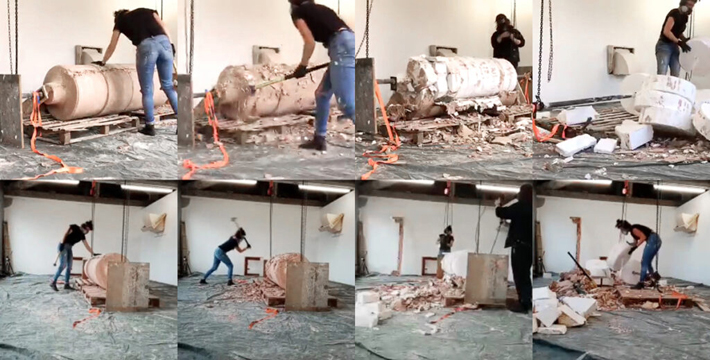
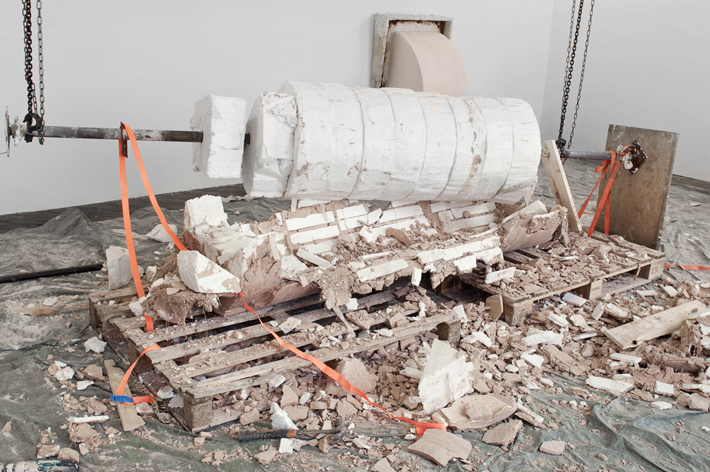
On the 1st November 2020 at 2pm, WHEN SEAMS BECOME AUDIBLE came to an abrupt Covid-regulatory end. Fitz made the decision to de-commission the work in situ and live-stream it over Instagram. Two time-lapsed cameras transmitted split screen images as the artist butchered and disembowelled the central element Window. The making of this heavy, bolted, hung and skewered work involved force and hard labour, so the de-construction was bound to be physical. A syncopated duet of smashing, drilling, ripping, sawing and hammering underscored this performative eulogy. The ferocity of Fitz’s actions shook our view. Window did not go quietly. It swayed and rattled its chains as its body parts were strewn across the floor. There was a feeling Fitz may have created something stronger than herself, but her sheer force transformed the once-was into a material wasteland before our eyes. As Window was turned from body to rubble, a shift in visual landscape brought with it a shift in visual hierarchy: the unmade over the made, potential over the realised, artist over the work. We are used to seeing Fitz’s force within her work, here we witness it over it. The artist is present. Without script. Without score. Uncertain.